
Case Study 15 / LinkedIn Growth Engine
Comment first, DM second: 77 replies from 125 senior maritime buyers in one month
An earlier cold DM campaign to the same market got 7 replies from 104 prospects (6.7%). This time the founders' LinkedIn activity started in the comments: in one month, comments under other people's posts earned 54,444 impressions, alongside only 5 posts. Then came 125 targeted DMs, sent with context. 77 people replied: a 61.6% reply rate, including CEOs, managing directors, superintendents and HSE leaders.
- DM reply rate: 77 replies from 125
- 61.6%
- impressions on comments in one month
- 54,444
- impressions from just 5 posts
- 70,000+
- new followers, from 400 profile visits
- 276
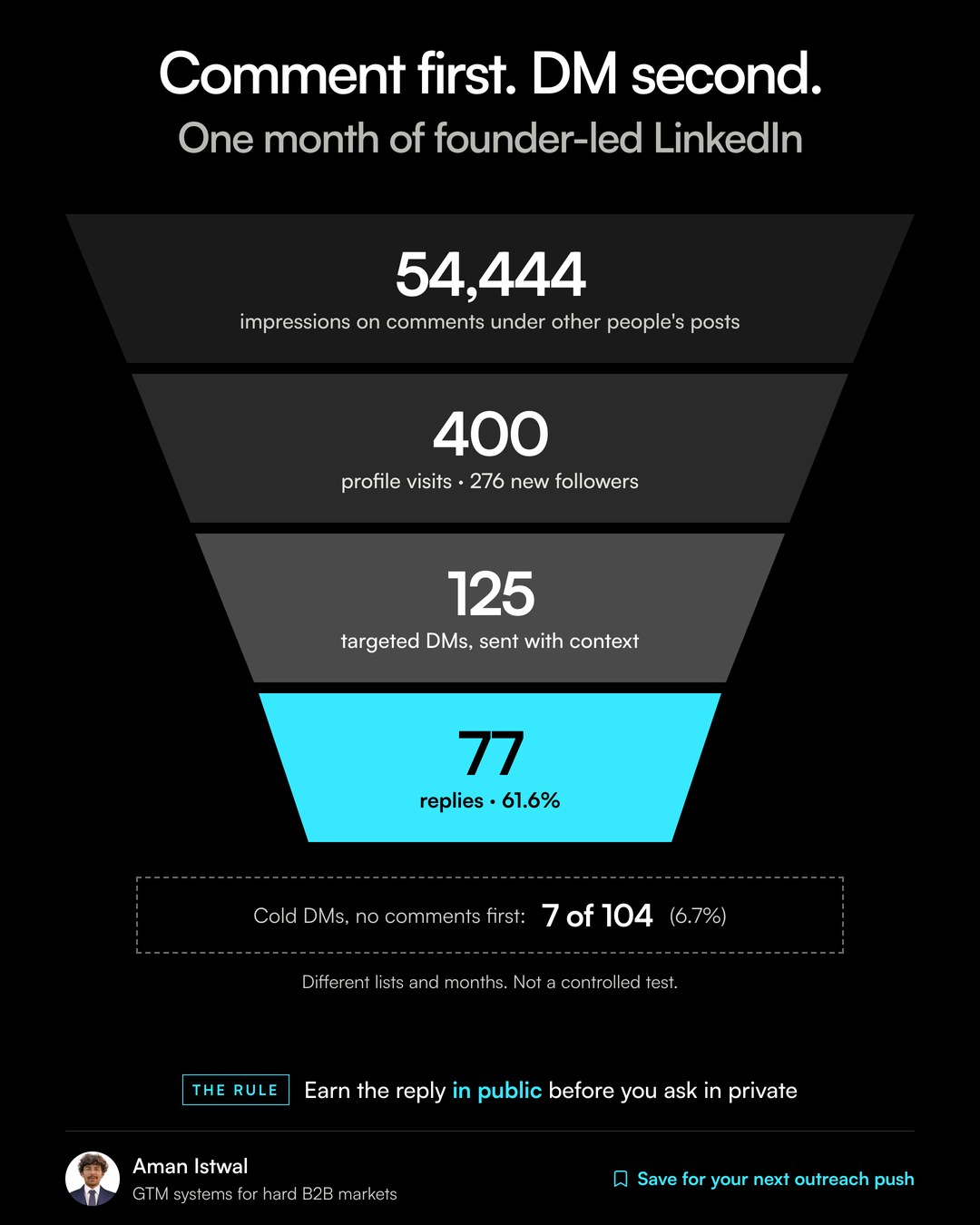
The Insight
Comment first. DM second.
The same founders, in the same market, got 7 replies from 104 cold DMs earlier, and 77 from 125 after a month of commenting first.
The difference is what happened before the message. By the time a DM arrived, it came from a name the reader had already seen adding something useful in their feed. The comments alone earned 54,444 impressions in the month.
It isn't a controlled experiment: the lists, months and messages differ. But a gap from 6.7% to 61.6% is hard to explain by the wording of a DM alone.
Founder track record: this work was led by Aman Istwal before founding Clarafold, while working as marketing manager at a maritime compliance software company. The client's name is withheld until it approves publication; every figure comes from its own systems. Clarafold client engagements are added as they complete.
01 · Client
Maritime compliance software company
Maritime compliance software and services company led by two former senior seafarers. Name withheld until the client approves publication.
The challenge
Maritime compliance is a relationship-driven market. The buyers are senior (masters, superintendents, managing directors) and the accounts are fragmented: in the target dataset, no single company made up more than about 3% of contacts, and most sat near 1%. Cold outreach had already been tried: a founder-voice DM campaign reached 104 prospects and got 7 replies. The question was how to make the founders familiar to the right people before asking any of them for a conversation.
02 · System
What existed before.
- Cold DMs: 7 replies from 104 prospects contacted (6.7%)
- LinkedIn effort measured by posts, not by conversations
- No formal tracking from engagement to opportunity
03 · Intervention
What was built and run.
Showed up where the market already reads
Most of the effort went into substantive comments under posts the target audience already followed, adding context and experience rather than pitches. Those comments earned 54,444 impressions in the month. The founders published only 5 posts of their own.
Mapped who was engaging
Engagement and outreach contacts were analysed by company, role, ICP tier and location. The picture: a fragmented account base (Tier 1 29.5%, Tier 2 15%, Tier 3 55.5%), senior roles, and clusters in the maritime hubs: Singapore (about 9%), Mumbai (about 6%), the UAE, Greece, the UK and Germany.
Sent DMs with context
125 targeted DMs went to people in that mapped market, opening from shared context rather than from the product.
Reported it as a pipeline
Results were written up as a pipeline, not a vanity report: engagement → visibility → trust → DM → conversation → qualification → opportunity, with CRM tracking from engagement to revenue set as the next phase.
04 · Outcome
What changed.
77 replies from 125 targeted DMs: a 61.6% reply rate, against 6.7% for the earlier cold campaign. The two campaigns used different lists, months and messages, so this is not a controlled test, but the gap is large.
Replies came from CEOs, managing directors, technical and marine superintendents, HSE and operations leaders: the economic buyers and technical validators in the account.
Content in the same month: 5 posts, 70,000+ impressions, 50,000+ members reached, 800 reactions, 200+ comments, 90 reposts, 400 profile visits and 276 new followers.
Revenue attribution is not in place yet. Formal tracking from engagement to opportunity is the next phase, so no pipeline or revenue figure is claimed here.
05 · Lessons
What we would tell you.
- Earn the reply in public before you ask in private. A DM from a name people have already seen being useful is a different message from the same words sent cold.
- In a fragmented market, comments scale better than posts. When no account is more than a few percent of the market, being visible in many conversations beats a few big posts.
- Report conversations, not reach. Impressions are a means. The number that matters is how many of the right people started talking to you.
Put It To Work